
Pottsville and Cass Township, Pennsylvania — October 27, 2026. County commissioners have approved a revised tax-exemption schedule for proposed logistics construction at Highridge Business Park and separately authorized an application for nearly $788,385 in road-improvement funding. The decisions concern incentives and an application, not completed warehouses or an awarded road grant.
What county commissioners approved
Schuylkill County commissioners approved an amendment to a tax-exemption arrangement for proposed logistics development at Highridge Business Park during their October 21, 2026, public meeting. The project concerns land in Cass Township within the business park. The vote changes the schedule of a Local Economic Revitalization Tax Assistance, or LERTA, exemption designed to support private investment in designated property. The proposal involves large warehousing and distribution facilities, a type of industrial construction associated with the Interstate 81 logistics corridor.
The essential distinction is between an approved tax-incentive amendment and a completed industrial development. The vote concerns the financial terms under which qualifying future improvements may receive temporary relief. It does not establish that warehouses are operating, that tenants have signed leases or that jobs already exist. Those would be separate developments requiring separate verification.
Two large buildings proposed in Cass Township
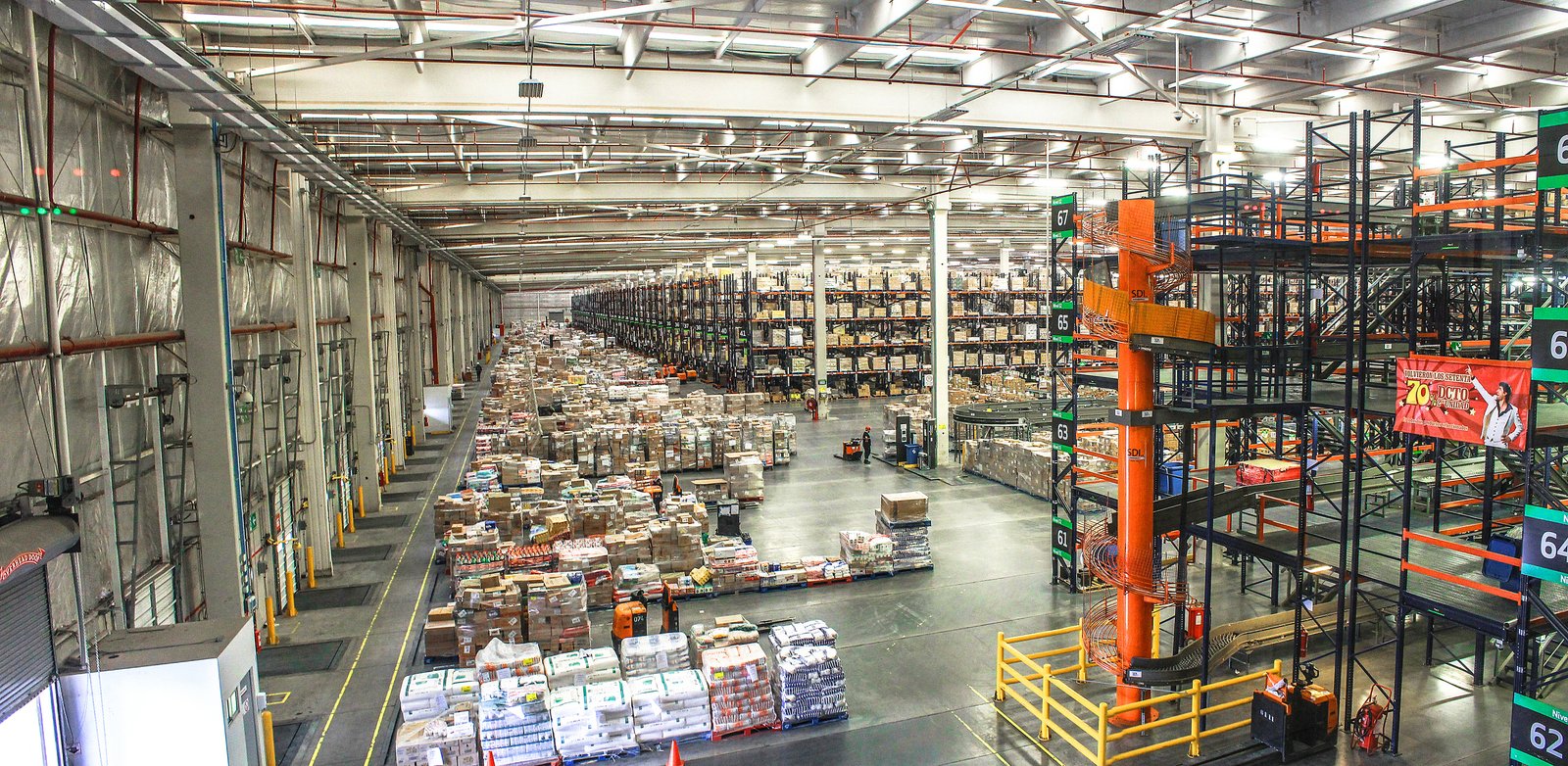
Local reporting describes a subdivision of a Highridge parcel to support two cross-dock logistics facilities, each proposed at approximately one million square feet. Cross-dock facilities are commonly designed for goods to arrive and depart efficiently with less time spent in long-term storage. That general explanation is about the building type, not a verified operational plan for tenants that have yet to be named.
The county meeting summary identifies the logistics development as speculative, meaning the buildings are being advanced without confirmed occupants at the time of the decision. Speculative construction can offer a ready-to-occupy product to prospective tenants, but it also involves the risk that tenant demand or market conditions will differ from initial assumptions. A proposal of this size should be evaluated through the approval record, infrastructure capacity and eventual leases rather than treated as a certain jobs announcement.
How the revised LERTA schedule works
Under the previous described arrangement, the project would have received a 50% exemption for the full ten-year schedule. The amended approach provides a 75% exemption during years one through five and a 50% exemption during years six through ten. These percentages refer to the described tax-exemption schedule for eligible improvements, not a blanket promise that every property tax due on all surrounding land disappears. The actual application depends on the governing LERTA agreement and assessment rules.
The principal change is therefore concentrated in the first five years. The later five-year period remains at the previously described 50% level. A stronger initial incentive may reduce costs when a new project is leasing space, financing construction and competing for tenants. Whether the public benefit ultimately justifies that concession depends on facts such as completed construction, property value, jobs, related spending and the future tax base.
Why the developer says the incentive matters
Frank Zukas, representing the Schuylkill Economic Development Corporation, made the request for approval and described the need to remain competitive with logistics developments elsewhere along the I-81 corridor. Distribution operators can compare locations across multiple counties before making commitments. For them, highway access, facility design, available labor, operating cost and taxes may all influence a decision.
The discussion included the common use of triple-net leases, in which tenants may be responsible for property taxes and other expenses as specified by the lease. Under such an arrangement, a temporary property-tax incentive may affect the expense seen by a tenant, not only the balance sheet of the building owner. That is an economic rationale offered in the meeting; it should not be presented as independent proof that particular companies will lease these buildings.
A specific condition involving data centers
An important provision reported with the county’s approval would void the LERTA exemption if the property is sold or transferred to a data-center company. That detail is relevant because a warehouse or logistics facility and a data center can involve very different infrastructure needs, electricity demand, staffing patterns and local public debates. The restriction should be described as a condition on the incentive, not a universal ban on every hypothetical future property use.
For readers evaluating the resolution, the exact legal wording matters. A condition tied to a sale or transfer may raise different questions from zoning or a separate land-development approval. We have not independently examined every executed legal exhibit, so this report does not claim that all possible ownership structures or land-use scenarios have already been resolved. Residents should consult the signed county resolution for the controlling language.
What was said about the timing of the vote
The request for prompt approval attracted public questions. Reporting of the October 21 meeting identifies residents Chris Melusky of Norwegian Township and Jeff Dunkel of Palo Alto as among those asking why commissioners could not delay the decision for additional review. The discussion included concern about public access to materials and whether the timing gave residents a fair chance to understand the amendment.
Those concerns should be treated as part of the public record, not as a legal finding that the county violated the Pennsylvania Sunshine Act. Questions about notice, agenda changes and public participation warrant clear answers, but the existence of a question is not evidence that a court or enforcement agency has determined a violation. Commissioners proceeded and approved the amendment unanimously. The debate illustrates the tension between an economic-development schedule and residents’ interest in reviewing financial terms before a vote.
Cass Township and school district roles
A local account of the county meeting says Cass Township supervisors and the Minersville Area School Board had already approved the modification. Those bodies have their own interests in how eligible property improvements affect tax revenues and community services. A county vote is one part of a broader multi-jurisdictional incentive picture, not a substitute for each relevant body’s governing decisions.
Taxpayers should understand that exemptions can influence the timing of revenue collection. The public may receive more revenue from future improvements when a temporary exemption expires, but that outcome depends on actual valuation, project completion, the tax structure and the ability to attract businesses. Neither advocates nor critics should treat a forecast as the same thing as a confirmed annual payment.
Keystone Boulevard road project discussed separately
At the same October 21 meeting, commissioners authorized an application for transportation funding related to the Keystone Boulevard Roadway Rehabilitation and Safety Improvement Project at Highridge. The estimated cost was $1,126,264. The application seeks $788,385 through a PennDOT multimodal transportation program, with $337,879 described as the accompanying local match from SEDCO. The two contributions add up to the stated project estimate.
That approval allows an application to move forward. It does not mean the grant has been awarded or that the entire construction project has received a notice to proceed. Readers sometimes see a government resolution authorizing submission and reasonably assume work is fully funded. In reality, grant evaluation, matching funds, project design and contracting can still determine whether and when a roadway project advances.
Why Keystone Boulevard matters to development
Access roads are not minor details for industrial real estate. Large logistics buildings may bring heavy vehicles, delivery traffic, employee commutes and greater need for reliable pavement, drainage and turning movements. A business park’s roadway condition can affect operating costs and the surrounding transportation network. Highway access is one of the central advantages that make an I-81 location appealing for distribution uses.
That does not mean a particular traffic increase has been calculated for these buildings in the sources reviewed. A credible analysis would need the project’s transportation studies and approved site plans. It would also need to consider how traffic is routed between internal park roads and major highways. The roadway-grant proposal is useful public information, but it is not a substitute for traffic counts or a final engineering report.
Economic development benefits and costs
Supporters of industrial investment may emphasize construction activity, expansion of the taxable property base after incentives phase down, possible jobs and additional business for local suppliers. Those are legitimate questions to investigate. But figures on jobs and wages should come from announced employers, commitments or later reporting rather than being inferred from square footage alone. A huge building can employ a different number of people depending on its tenant and level of automation.
Critics may focus on forgone short-term tax revenue, additional road maintenance, truck traffic, environmental effects and the transparency of incentive approvals. Those concerns also deserve documentation rather than assumptions. The public interest is served by comparing the actual resolution, projected tax impact, completed building value and eventual economic activity across time.
What businesses should watch next
The development’s next major milestones will be observable ones: completed property subdivision steps, approved permits and construction schedules, finished or progressing site work, tenant announcements and verified occupancy. If a tenant signs a lease, readers can then evaluate the type of operation and any employment claims against the information released by that business. There is no reason to invent a company name to make a speculative project sound more concrete.
Contractors and service companies may be interested in future work, but an incentive vote is not the same as an open bid invitation. Anyone pursuing opportunities should consult the relevant developers and procurement notices rather than rely on news headlines for scope or deadlines. The same applies to people interested in employment: no hiring application or start date was established by this tax vote.
The questions residents can still ask
Residents can seek the full LERTA amendment and meeting minutes to understand what properties qualify, what improvement value is covered, what conditions terminate exemptions and when the ten-year schedule begins. They can ask what happens if the project is delayed, subdivided again or sold. They can also ask for the rationale supporting the changed first-five-year percentage and whether the county expects a fiscal impact statement.
On the transportation side, ask when PennDOT will decide the Keystone Boulevard grant request, what work is included and who would pay for overruns if costs rise. These questions are specific and answerable with public documents as they become available. They also create a fair test of the stated public-benefit case over the life of the project.
Highridge’s significance to Schuylkill County
Highridge Business Park sits along a major regional transportation corridor and has long been central to economic-development discussions in Schuylkill County. Large commercial property decisions can affect nearby towns through taxes, jobs, commuting patterns and land use. For county residents who live far from the park, the effects may be indirect, but public incentives and county-owned infrastructure still make the decisions worthy of reporting.
A fair account should neither celebrate every announcement as a certain economic triumph nor dismiss all investment as a loss for taxpayers. The available record supports a narrower conclusion: officials made a meaningful financial-policy choice about a proposed industrial site while simultaneously moving forward with a separate roadway-funding application.
What to verify before the next headline
The next update should identify any new development permits, construction milestones, executed tenants, progress on the grant application and final language of the amended agreement. If future county minutes clarify amounts or conditions, those documents should take priority over simplified summaries. Readers should also avoid confusing the proposed Highridge logistics buildings with data-center projects elsewhere in Pennsylvania.
For now, the October 21 votes are important and newsworthy on their own. They should be presented with the precise distinction between action authorized, development proposed and work actually completed. That approach gives Schuylkill County taxpayers a stronger basis to judge the project when the next decision arrives.
More local context: Schuylkill property records and zoning guide. Schuylkill commercial and investment-property readers can learn about privately owned property ventures at VenturePeak Real Estate Solutions LLC; that separate business is not involved in this reported county action. For property search assistance, visit KennethHoffmaster.com.
Reporting sources
October 21 Schuylkill County commissioners meeting summary and source recording; local reporting on LERTA terms and Keystone Boulevard grant application. Tax percentages, approvals and grant application figures are drawn from meeting reporting. Future development, grant awards or tenants are not claimed as completed.



0 Comments