
MAHANOY TOWNSHIP, SCHUYLKILL COUNTY — Long before the coal breakers, crowded row houses and railroad depots, a merchant traveled the mountain road through what would become the Mahanoy Valley. His death in 1797 gave the area one of its oldest recorded crime stories. More than two centuries later, the name Peddler’s Grave still draws attention to an isolated resting place in the woods.
The man commonly named in local histories was Jost Folhaber, although sources spell his surname several ways. The man accused and convicted of killing him was Benjamin Bailey. Their encounter belongs to a Pennsylvania that looks almost nothing like today’s Mahanoy City. The story is often called Schuylkill County’s first recorded murder, but that needs one important qualification: Schuylkill County did not yet exist in 1797. The land was then part of Berks County. The distinction changes the jurisdiction, not the local significance of the event.
Want the bigger picture of the Coal Region’s rise? Read our related feature: Shenandoah, Pennsylvania: the coal boom, three railroads, packed streets and a changing population.
Before Mahanoy City was a town
The hills north of today’s Mahanoy City carried foot traffic, pack animals and occasional wagons before surveyors laid out the familiar grid of borough streets. Travelers followed the old Catawissa road across wooded ridges and through the valley. A route that can seem secondary to modern drivers was once a lifeline for people transporting tools, household goods, provisions and news between scattered settlements.
The Mahanoy Area Historical Society’s account of the area’s first building tells how John Reich established a log cabin near what would later be Main and Market streets in 1791. The cabin became an inn or way station. By the society’s account, Folhaber and Bailey crossed paths there in 1797. There were no town sidewalks or modern police patrols waiting beyond the doorway. The landscape was rural, heavily wooded and separated from population centers by long distances.
It is tempting to describe those roads as empty wilderness. They were not empty. Indigenous people knew and traveled the region long before colonial roads appeared, and European settlement did not erase that earlier history. What changed during the late eighteenth century was the kind of commercial traffic moving through the mountains. Peddlers and itinerant merchants filled an important role where permanent stores were few.
Who was Jost Folhaber?
Folhaber has sometimes been called Faulhaber, Faulhover or Foulhover in retellings. Accounts agree more readily about his trade and death than about his early life. Local historians describe a traveling German merchant, often called simply “the peddler.” Some older narratives identify him as Jewish, but the surviving public summaries do not establish his religion with sufficient certainty to present it as an undisputed biographical fact.
We know considerably less about Folhaber’s family and ordinary life than we would like. No responsible retelling should invent what he looked like, the words he spoke before dying or the private thoughts of people who met him. Those gaps are part of the historical record.
The encounter with Benjamin Bailey
Regional histories identify Bailey as the man who encountered Folhaber near Reich’s way station and later pursued him along the Catawissa route. Later retellings give a vivid account of a robbery and a fatal attack while the merchant paused near the mountain road. Some describe a gunshot followed by an axe attack and say the merchant’s horse was also killed. These details have appeared in local history writing, but the many dramatic variations should be treated as historical accounts, not a verbatim reconstruction of events independently witnessed by this newsroom.
Many versions put the crime in August 1797, sometimes giving August 11; the memorial inscription reported by historian George Korson gives August 20. Without an original court record conclusively resolving that discrepancy, it is more accurate to say the murder occurred in August 1797 than to advertise one exact date as beyond dispute.
The location is commonly described as the North Mahanoy Mountain area near the old road and what became a reservoir on Waste House Run. Accounts differ in their modern geographical shorthand: “near Mahanoy City,” “north of Mahanoy City,” and the old Catawissa route all refer to a landscape whose later road names and borough boundaries did not exist in 1797.
How the case reached court
The case did not remain only a roadside disappearance. Historical summaries say investigators identified Bailey, who was tried and convicted in Berks County. Reports of his imprisonment and confession survive in later accounts; some describe Bailey having accused another person before taking responsibility. Since these are accounts of eighteenth-century proceedings repeated by subsequent writers, readers should understand them within the limits of historical documentation.
January 6, 1798 is widely given as the date of Bailey’s execution in Reading. The Times News historical feature describes a public hanging at Reading Common, the area now known as Penn Square. Older accounts report a large crowd witnessing the punishment, though estimates of crowd size are difficult to independently verify. The execution took place years before Schuylkill County was established in 1811.
The legal culture of the late 1700s was profoundly different from today’s. Capital punishment could be staged publicly, trial procedures and legal protections were not the same, and printed accounts often favored moral instruction over careful separation of testimony and rumor. Readers should neither project every modern procedure backward nor assume that the most colorful story is necessarily the most accurate one.
Why a grave remains in the woods
Folhaber is remembered because, according to tradition, he was buried near the place where his body was found. His resting place was not enclosed in a formal cemetery. Later generations marked the site and tended it. A roadside burial far from a town’s main streets became a landmark, drawing visitors who learned the story from grandparents, newspaper features, historical societies and fellow hikers.
The 1938 book Minstrels of the Mine Patch by George Korson describes the grave’s marker, its mound and the people who visited the site. The reported inscription and long tradition of visits show how the story became part of the Mahanoy Valley’s shared memory. Over time, older markers were damaged or replaced, and a more permanent monument appeared. Some visitors leave small tokens; photographs and later accounts document commemorative attention to the place.
Modern descriptions place the site near the North Mahanoy Mountain reservoir area and the old Catawissa route. Some guides describe a long, rocky approach over land that is not maintained as a public park. Do not assume the grave is open to unrestricted public access. Property ownership, access permissions, trail conditions and hunting activity can change. Anyone wishing to visit should confirm lawful access and local conditions instead of following social-media directions onto private ground.
For photographs of the marker itself, see the Mahanoy Area Historical Society’s Peddler’s Grave collection. Those images belong to their respective creators or collections; SkookPA is linking to them rather than copying images without permission.
The world transformed around the burial site
By the nineteenth century, the discovery and commercial exploitation of anthracite radically changed the area. Hillsides that a merchant could once cross through trees became coal-company properties, mine roads, reservoirs and company settlements. Mahanoy City’s street plan, stores, churches and railroad connections grew in a landscape shaped by the industry.
The historical society traces the Reich cabin through later owners, including the Faust family, and explains how buildings on that early site changed as the borough developed. The earliest tavern’s significance was nearly erased by the built-up town surrounding it. Yet the mountain burial remained part of the story even as the town moved into an industrial age.
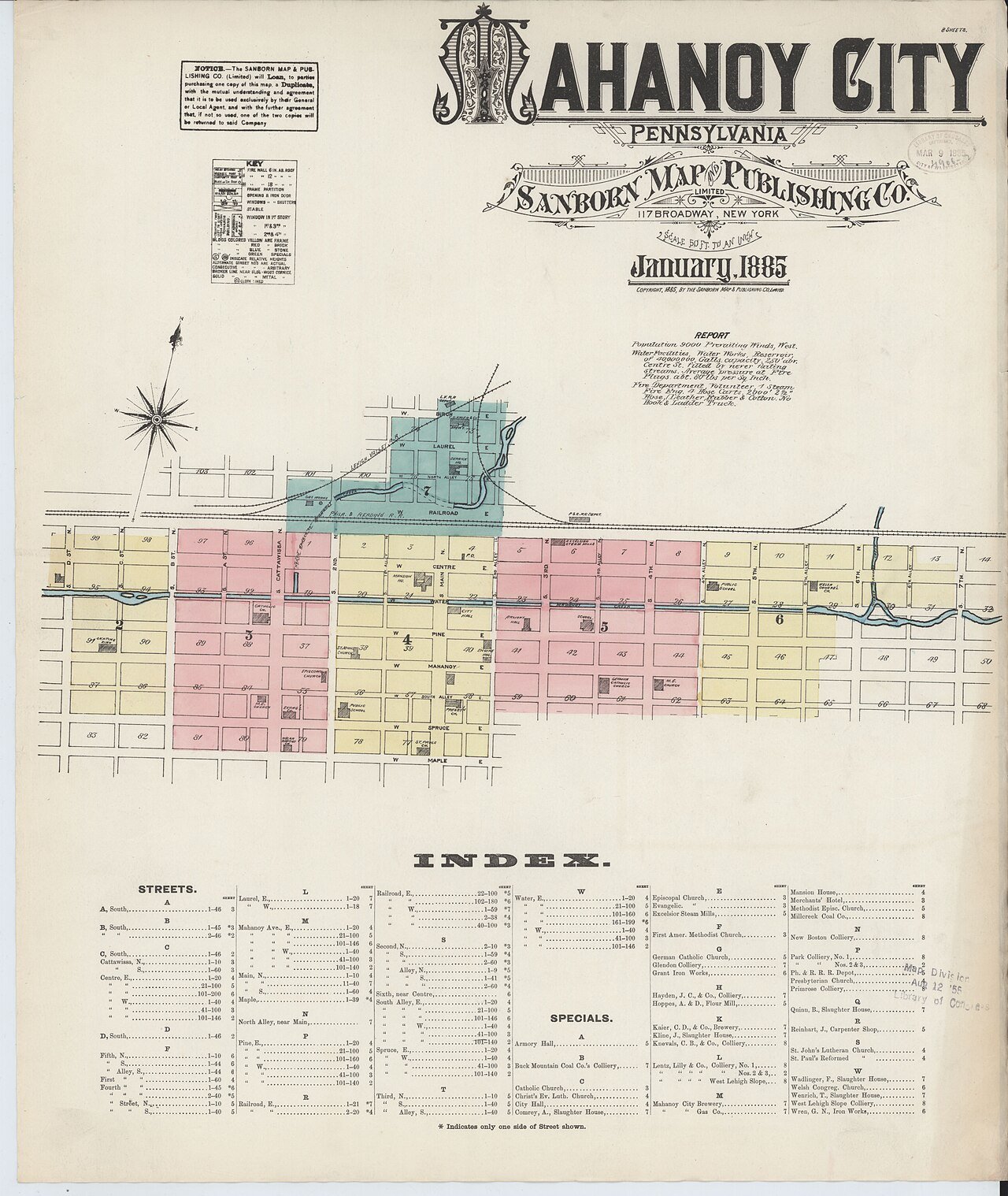
History, folklore and ghost stories
Stories about an isolated grave naturally attract supernatural embellishments. Some residents recall hearing about uneasy spirits, mysterious experiences along the trail or coins left near the memorial. Such accounts are local folklore, not evidence that paranormal events occurred. They tell us something real about community memory: unusual places prompt people to retell stories long after the original witnesses are gone.
That is also why the phrase “first murder in Schuylkill County” deserves explanation every time it is used. The county was organized after the incident. Better wording is “the first known or traditionally documented murder in the area that later became Schuylkill County.” It honors the local claim while avoiding a historical impossibility.
What can still be researched
The strongest future follow-up would compare contemporary Berks County court and newspaper records with accounts reproduced by early Schuylkill County historians. That could clarify the exact murder date, alternate spellings of Folhaber’s surname, details of Bailey’s trial and the earliest documented mention of the gravesite. A careful researcher could also trace maps of the old Catawissa road and the property history around the reservoir.
For now, the historical consensus is broad even where particulars differ: Folhaber traveled through this region in 1797, Bailey was associated with his murder and was executed in 1798, and a remote burial site survived as the Peddler’s Grave. The later legends are worth remembering as legends—not disguising as new discoveries.
Sources and historical notes
- Mahanoy Area Historical Society — early history and Reich’s 1791 cabin.
- Mahanoy Area Historical Society — Peddler’s Grave historical photographs and documents.
- Times News — The Immortal Peddler (historical account).
- George Korson, Minstrels of the Mine Patch (1938), the Peddler’s Grave tradition and marker, cited as a historical secondary source.
- Library of Congress — Mahanoy City 1889 bird’s-eye map.
- Library of Congress — 1885 Sanborn map.
Editorial note: This article differentiates documented local-history accounts from folklore and acknowledges the disagreement about the precise August 1797 date. None of the maps reproduced above depicts the killing or gravesite as it appeared at the time.




0 Comments