
SHENANDOAH, PENNSYLVANIA — Stand on a Shenandoah street today and imagine the sound of three competing railroads, the whistles of collieries, church bells in a dozen traditions and sidewalks crowded with people speaking several languages. It can be difficult to picture the scale of this northern Schuylkill County borough a century ago. Yet the surviving records are remarkable: Shenandoah reached 25,774 residents in the 1910 U.S. Census, and its position in Pennsylvania’s anthracite fields drew the Lehigh Valley, Reading and Pennsylvania railroads into one comparatively small community.
Its past also lives in memories of corner taverns and busy social clubs, immigrant churches, garment factories, spectacular musicians and families who worked underground for generations. The population eventually declined to 4,243 in the 2020 Census. Behind those two numbers is not one simple rise-and-fall story, but 160 years of economic, cultural and personal history.
This illustrated feature looks at the facts behind the memories, including why three railroad companies once served Shenandoah, what can actually be established about its many bars, how mining and manufacturing shaped ordinary life, and why today’s community cannot be understood through population loss alone.
From coal land to a planned borough
Before the grid of streets and mines, the landscape included wooded slopes, streams, hunting routes and farmland. Indigenous communities had occupied and traveled northeastern Pennsylvania long before the industrial towns appeared. European-American speculation in anthracite later transformed the region. The Library of Congress history of Shenandoah’s Evening Herald explains that the Philadelphia Land Company acquired local property around 1850 and that a town was laid out in 1862, when Civil War demand made new coal supplies increasingly valuable.
The town takes its name from a nearby creek, not the Shenandoah Valley of Virginia. This distinction still matters when a headline refers to Shenandoah Valley High School in Pennsylvania: the school and community belong to Schuylkill County. Shenandoah was incorporated as a borough in 1866, with an unusually rapid growth curve soon afterward. The first coal colliery opened in 1862, and by 1864 coal was already being shipped out by rail, according to the Library of Congress.
The underlying natural resource helps explain the urgency. The borough’s own historical account says the vast Mammoth anthracite vein runs beneath the town. Anthracite burned hot and relatively cleanly compared with many other fuels, making it valuable to homes, factories and railroads in an era that demanded energy on an enormous scale. For investors, securing a vein could mean years of revenue; for families, the same deposit might mean work, a rented company house, danger and frequent uncertainty about wages.
Coal did not make Shenandoah rich in the same way for everyone. The industrial system required laborers and mule drivers, miners and breaker workers, merchants and blacksmiths, railroad crews and engineers. Pay, safety and influence differed sharply among those groups. Nevertheless, the collective activity generated a town dense with shops, churches, newspapers, hotels and small businesses. More residents produced more customers, and more customers supported services well beyond the mines.
What the census really shows: Shenandoah’s dramatic population change
Shenandoah’s historical population has occasionally been rounded up to “nearly 30,000” in conversation. The actual enumerations tell a more useful story. In 1870, just four years after incorporation, the borough counted 2,951 residents. By 1880, the number reached 10,147; in 1890, 15,944; and by 1900 it had passed 20,000. These were extraordinary decades of growth for a small mountain community.
The 1910 census counted 25,774 people, the highest figure in the commonly published decennial series. In 1920 the borough had 24,726 residents; in 1930, 21,782. Those are still enormous numbers for the streets visitors recognize today. A person who remembers packed blocks during the 1920s may be remembering a town that was already beginning to decline from its enumerated peak, even though it remained an exceptionally busy place.
| Year | Residents | What the figure illustrates |
|---|---|---|
| 1870 | 2,951 | Early coal-era borough |
| 1890 | 15,944 | Rapid industrial expansion |
| 1900 | 20,321 | Major regional community |
| 1910 | 25,774 | Historic census high |
| 1920 | 24,726 | Still a densely populated borough |
| 1950 | 15,704 | Coal economy contracting |
| 1970 | 8,287 | Prolonged outmigration |
| 2000 | 5,624 | Post-industrial borough |
| 2010 | 5,071 | Continued decline |
| 2020 | 4,243 | Official 2020 decennial count |
The change from 25,774 to 4,243 represents a decline of approximately 83.5 percent from the 1910 peak to the 2020 count. It does not mean the town has lost 83.5 percent of its homes, buildings or cultural traditions, nor that every decade was equally difficult. Some generations experienced sharper changes than others. Still, the long arc is unmistakable and helps explain vacant properties, adaptive reuse and the memories of crowded streets passed through many families.
The unusual fact: three railroads served one borough
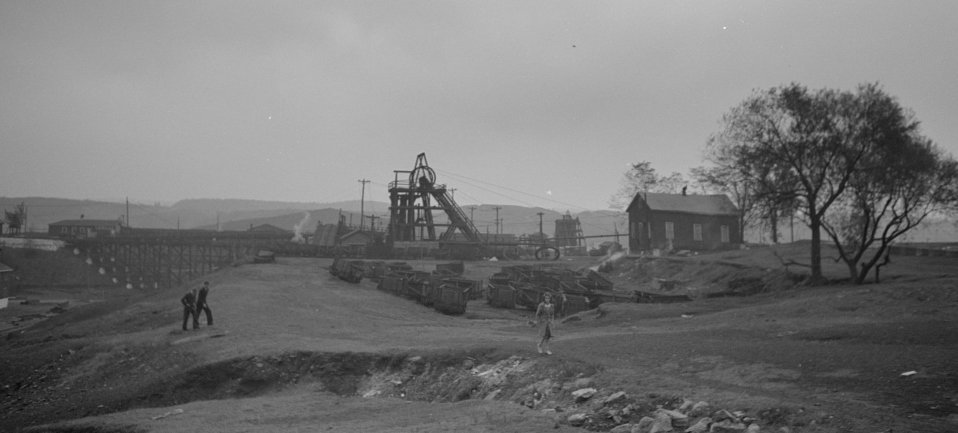
One of Shenandoah’s most striking industrial distinctions is not merely local legend. The Borough of Shenandoah’s official history and the Library of Congress account of the town’s newspaper both identify three major railroads that served the community: the Lehigh Valley Railroad, the Philadelphia & Reading/Reading Railroad and the Pennsylvania Railroad. Each had a presence in a coal center whose value far exceeded its physical size.
The distinction is sometimes described as Shenandoah being the only borough or small Pennsylvania town with depots for all three. That wording appears in local institutional histories. The strongest factual takeaway is that the three companies did indeed serve Shenandoah; a claim of statewide uniqueness depends on exactly how one defines “town,” “depot” and the period being compared. We should celebrate the documented railroad legacy without making more absolute claims than the records justify.
Why three? Coal was bulky, heavy and valuable in immense quantities. Mines needed a way to move loaded cars from collieries toward markets where the fuel could heat homes and power industry. Railroad access affected which company could ship where, how supplies and equipment arrived, and how passengers moved into and out of the northern Schuylkill County coalfields. Competition and connecting routes could matter as much as the number of people waiting on a passenger platform.
The Lehigh Valley Railroad connected the anthracite region to eastern markets and broader networks beyond Pennsylvania. Its local station became a recognizable part of the Shenandoah transportation landscape. The Reading system was deeply intertwined with the economics of anthracite; the Philadelphia & Reading railroad and associated coal interests helped move coal south and east. The Pennsylvania Railroad, one of the country’s most consequential transportation companies, also reached the town. These were major systems, not simply three names for one local rail spur.
A useful contemporary reference is the 1884 map of the Pennsylvania, Reading and Lehigh Valley railroads held by the Library of Congress. It gives a sense of the companies’ extensive regional connections. The famous 1889 illustrated view of Shenandoah likewise depicts the borough in a period when railroad lines, mine works and tightly packed blocks dominated its physical development.
Today it is easy to picture rail travel principally as a passenger service. Coal-era railroads were more than that. They moved wagonloads of mine timber, fuel, machinery and household goods. Freight and passenger facilities required employees, signaling, maintenance and property. A large colliery could affect rail schedules; changing rail service could affect a whole section of town. Railroad activity connected Shenandoah to an industrial economy spanning cities far beyond Schuylkill County.
The street corner, the station and the crowded sidewalk
The town’s density was not solely a statistical curiosity. A worker could walk past a bakery, a confectionery, a neighborhood tavern, a small grocer and a church within a few short blocks. Some businesses shared residential buildings, and many families took advantage of rooms above shops or closely spaced houses. The arrangement reflected a community built for walking to work, church and shopping long before most households owned automobiles.

A photograph taken by Sheldon Dick near the Shenandoah Trust Company in 1938 illustrates that ordinary street environment. The photographer did not have to capture a grand civic ceremony to record something historically important. Storefronts, street patterns, pedestrians and the way neighbors used public space reveal the everyday design of a coal town long after its peak population.
How many bars did Shenandoah have?
Few Coal Region memories are repeated as often as the claim that there was a tavern on virtually every corner—or even two or three bars on a single block. Shenandoah unquestionably had a lively saloon culture tied to the mining economy. That does not make every remembered bar count a documented statistic. Exact claims such as “three bars on every block” or “the most taverns per person on Earth” appear in local retellings but require a dated liquor-license register, mapped addresses or comparable primary sources before anyone should publish them as verified totals.
The 1902 licensing petitions sometimes cited in historical summaries are one possible route to that research. A careful count would have to distinguish retail licenses from wholesalers, bottle shops and breweries, check whether licenses were granted rather than merely requested, and then compare them with the number of occupied town blocks. Those are separate questions. It would be a mistake to divide an unsourced number by a modern street map and call the result history.
We can, however, see what a real Shenandoah bar looked like. In 1938, Sheldon Dick photographed Filipek’s bar and its patrons for the Farm Security Administration. The surviving photographs show a neighborhood gathering place rather than an invented movie set. They are part of a larger documentary study of mining households and community life, and they are in the public domain.
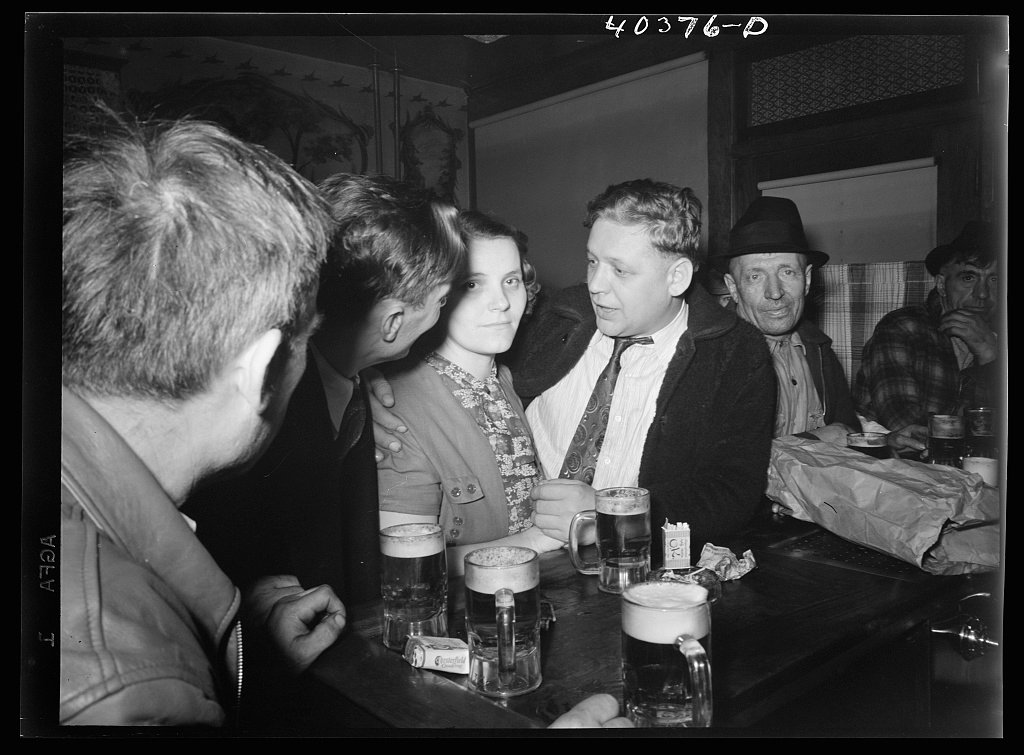
A tavern was not simply a place to buy a drink. In many ethnic neighborhoods it could also be a place to find a worker, hear about a job, argue politics, arrange a social gathering or seek advice from somebody who had lived in the community longer. Saloons could provide companionship and informal networks, although they also became subjects of disputes over spending, family welfare, licensing and public order. They belonged to a larger social landscape of churches, fraternal societies, union meetings and sports clubs.
A world of immigrant languages and traditions
The borough’s population growth came from more than one country and more than one wave of immigration. The official borough history describes early English and Welsh mining connections followed by German and Irish migration. From the late 1870s, Polish, Lithuanian, Ukrainian and Slovak arrivals were increasingly prominent. Families brought religious observances, recipes, languages, music and customs that continued through churches, schools, homes and community organizations.
The same history states that in the 1930s Shenandoah counted 22 nationalities, 22 churches and a large synagogue. Those figures capture how many communities lived within a very compact borough. A church could be as much a language and neighborhood institution as a place of worship: parish schools, family associations, festivals and cemeteries all helped residents maintain connections across generations.
Today’s Shenandoah remains a place shaped by newcomers and changes in household composition. The borough is not a frozen museum of the 1910 census. New residents, languages and businesses contribute to the current community just as earlier arrivals helped build the industrial-era one. Appreciating the past should not mean treating the people living there now as outside the story.
The labor that made the boom possible
A thriving coal town could appear prosperous above ground while families lived with dangerous work underground. Coal mining involved blast preparation, hauling, unstable rock, flooding, machinery and hazardous air. Injury or a mine closure could disrupt a household in a single day. Pay arrangements, company power, access to labor organizations and periods of unemployment affected even those who never went below the surface.
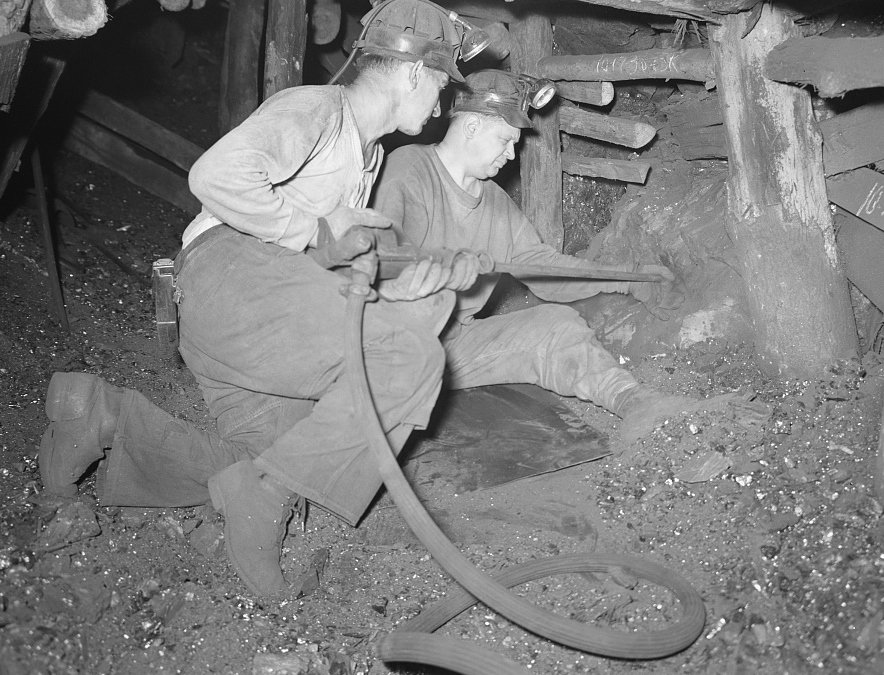
The Farm Security Administration collection contains striking photographs from Maple Hill mine in 1938. They record miners drilling, handling equipment and traveling through underground spaces. A camera can show faces, tools and the confined setting, but it cannot fully convey the noise, dust, fatigue or uncertainty of a mine shift. Those experiences helped fuel demands for safer conditions, fair compensation and organized representation.
The Anthracite Coal Strike of 1902 brought many of these conflicts into the national spotlight. Across the coal region, workers pressed for improved wages, hours and recognition. In Shenandoah, violence during the strike led to National Guard intervention. The U.S. Department of Labor’s historical account and Pennsylvania historical references describe how the national crisis drew President Theodore Roosevelt into an extraordinary effort at mediation.
We should not describe every local resident as taking the same position. Strikes could set workers against operators, strikers against those still working, and neighbors against neighbors. The dispute carried real human costs and complicated loyalties. Its importance lay partly in the federal role that emerged when the stoppage threatened national fuel supplies, not simply in the spectacle of troops on the streets.
Inside the mines: even the mules became part of town history
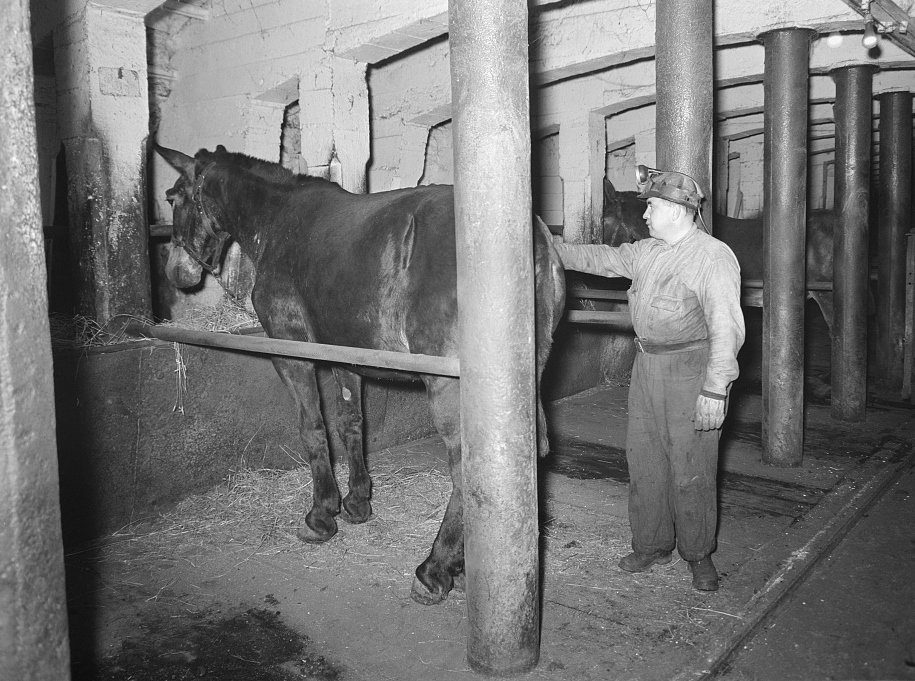
Mining depended on animals as well as machinery. Before mechanized haulage displaced them, mules helped move cars along underground workings. Dick’s photographs at Maple Hill include a mule stable deep within the mine. The animals and workers existed in a world invisible to most customers who heated their homes with Shenandoah-area coal. Photographs of the stable are a reminder that extracting fuel involved an entire underground infrastructure.
Mine subsidence and the costs of building above coal
The mines affected the borough long after a shift ended. Excavation below buildings could lead to subsidence, cracking foundations and the need to brace structures. This was not an abstract engineering issue for the families living above old workings. It could change whether a house felt safe or whether a resident could afford repairs.

Dick photographed houses propped up on sinking ground in 1938. That image captures a direct connection between the commodity underground and the living space overhead. It would be too simple to say that every damaged house was affected in the same way, or that every vacant house today is a mining casualty. But mine subsidence is one of the particular challenges that set anthracite communities apart from places without an industrial underground.
Infrastructure also aged while the population shrank. Streets, utility systems, sidewalks and row houses built for a large workforce needed upkeep even after their tax and customer bases changed. The reduced population could leave fewer people to share the cost of maintaining inherited structures. Economic decline often operates through accumulated obligations like these rather than one dramatic event.
Garment factories and the women who supported Shenandoah
Coal was dominant, but the borough was not entirely a one-industry economy. The borough’s official history says garment production developed during the 1920s and eventually reached about 15 large factories operating at the same time. It further notes the importance of the International Ladies’ Garment Workers’ Union (ILGWU), describing how widespread garment employment became in local households.
That detail is essential to understanding the mid-twentieth century. As colliery work contracted, earnings from garment factories helped many households stay afloat. Women were paid workers, union members and contributors to family economic survival—not merely observers of the industry’s collapse. A town remembered through its male miners risks overlooking the people cutting, sewing, finishing, packing, maintaining and managing garment production.
The Dorsey brothers and a Coal Region soundtrack
Shenandoah’s contribution to American culture reaches far beyond the coalfield. Jimmy and Tommy Dorsey, born in 1904 and 1905, grew up in the Shenandoah area and became major figures of the big-band era. Their father was a musician and bandleader; the brothers developed the technical skill that eventually carried them to national recordings, radio and major orchestras. Their Pennsylvania historical marker recognizes their connection to the community.
Jimmy became celebrated for saxophone and clarinet, while Tommy became famous for trombone and bandleading. They performed together and separately, and their musical careers intersected with the rise of broadcast entertainment. Frank Sinatra sang with Tommy Dorsey’s orchestra in the early 1940s, a reminder of just how far the local musical tradition extended.
Food as a living connection to the borough’s immigrant history
Not every remnant of the industrial era is a railway embankment or an abandoned mine opening. Food businesses and recipes have become some of Shenandoah’s most recognizable traditions. The borough identifies local businesses including Mrs. T’s Pierogies and Kowalonek’s Kielbasy Shop in its description of the town’s modern ethnic-food identity. Generations of households also preserved homemade pierogies, soups, baked goods and holiday foods through family and church traditions.
Food history reveals migration as clearly as a census can. The ingredients and techniques associated with Eastern European communities crossed the Atlantic with people who needed work and built new lives in Pennsylvania. Over time, recipes changed with locally available ingredients, industrial production and relationships among neighborhoods. A dish that began as a household specialty could become a staple offered at stores and community events.
The borough’s food reputation is not a substitute for a complete economic strategy, but it is an authentic way visitors encounter living traditions. Supporting locally owned businesses and accurately telling their histories can create a bridge between former residents, new residents and visitors curious about the coal region.
Why did Shenandoah shrink so much?
The short answer is the long contraction of an economy built around anthracite, followed by changes in manufacturing, migration, transportation and shopping. The fuller answer needs to recognize timing. The census peak came in 1910, while the mines remained an important presence for many decades. Rail operations changed, colliery employment fell and whole households departed in search of more reliable wages. Later generations often left for education, careers or housing opportunities elsewhere.
As automobiles and road networks reshaped daily life, commerce concentrated differently. A borough designed for walking and dense railroad employment faced the challenge of attracting investment in a region where people could shop or work in many other communities. Older storefronts remained physically visible even as the routines that sustained them changed. Long stretches of empty buildings can make the contrast with vintage photographs especially dramatic.
Those photographs can also romanticize the past. The crowded town of 1910 had hard labor, overcrowding, injuries and inequities alongside lively retail streets and communal institutions. Remembering the era accurately means holding both realities together. A smaller modern population does not automatically mean a smaller sense of community, and a bigger historic population was not proof that life was easy.
What survives, and what comes next
Shenandoah’s identity is still recognizable in its compact street plan, brick and frame buildings, coal-region hillsides, church architecture, cemeteries, culinary businesses and family stories. Historical artifacts such as the 1889 bird’s-eye view and 1938 Farm Security Administration photographs make those connections tangible. The images are evidence, not interchangeable decorations: each is labeled by place, date and photographer where known.
Preservation starts with knowing what a building or neighborhood originally did and why it mattered. The history of the railroads can help explain a strange street alignment. Old city directories may help determine which block actually held a cluster of taverns. Maps and mining records can clarify why some properties experienced subsidence. A grandmother’s recollection of a garment factory may point toward photographs or union records that have never been digitized.
Readers can help build a better archive. If you have a dated photograph of a Shenandoah railroad depot, a saloon license, a garment-shop employee group, a storefront sign or a family member who worked at Maple Hill, consider sharing the image and its provenance with SkookPA NewZ. Be sure the rights holder has authorized publication. This is an opportunity to replace anonymous internet claims with locally verified information, not simply to collect nostalgic pictures without context.
Another part of the region’s older history is considerably darker and predates the borough’s creation. In 1797, a merchant named Jost Folhaber was murdered along an old mountain road near what later became Mahanoy City. His grave has survived as a local landmark. Read our companion article: The Peddler’s Grave and the area’s first traditionally documented murder →
A town that was far bigger than many people realize
The next time someone says Shenandoah used to be a very big town, there is a firm number behind the memory: 25,774 in 1910, compared with 4,243 in 2020. And when they say three railroads once operated there, the names are documented: Lehigh Valley, Reading and Pennsylvania. The old stories about numerous taverns capture a real social culture, even though an exact “bars per block” figure still needs archival proof.
What makes Shenandoah worth studying is not the scale alone. Its miners and garment workers, immigrants and shopkeepers, musicians and families built a community that produced an outsized share of coal, commerce and culture. To understand the Coal Region, it is not enough to look only at what disappeared. We also need to understand what people created, what they endured and what they handed down.
Research sources and archival image credits
- Library of Congress: History of The Evening Herald (Shenandoah, Pa.), founding, coal industry and three railroads.
- Borough of Shenandoah: Official history, immigration, railroads, garment industry and food traditions.
- U.S. Census Bureau: Shenandoah borough 2020 population; historical decennial counts in census compilations.
- Library of Congress: 1889 Fowler/Moyer bird’s-eye illustration of Shenandoah.
- Library of Congress: 1884 map of the Pennsylvania, Reading and Lehigh Valley railroads.
- Library of Congress: Sheldon Dick’s Shenandoah FSA photographs, including Filipek’s bar.
- U.S. Department of Labor: 1902 Anthracite Coal Strike.
- Pennsylvania Historical and Museum Commission: The Dorsey Brothers historical marker.
Editorial note: We distinguish the census records and documented railroad service from unverified tavern-count lore. Historical images reproduced here are public-domain Library of Congress prints and photographs, often accessed through Wikimedia Commons. Descriptions identify their dates and subjects. This publication has not claimed to have interviewed witnesses to historic events.




0 Comments