
By SkookPA Newz | Schuylkill County History & Traditions
In Pennsylvania’s Coal Region, the approach of the Christmas season has its own unmistakable smells: nut rolls in the oven, kielbasa on the table, fresh citrus being sliced, and a pot of cinnamon, cloves, honey, and spices warming on the stove. For many Schuylkill County families, that last aroma means just one thing: boilo season.
Boilo is a sweet, spicy, whiskey-based holiday drink with especially deep roots in the anthracite towns of northeastern Pennsylvania. Some families pour it into little glasses at Christmas gatherings. Others bottle it for friends, compare recipes at neighborhood get-togethers, or argue over which whiskey belongs in a proper batch. Around Shenandoah, Mahanoy City, Pottsville, Frackville, Girardville, Tamaqua, and the neighboring communities, it is both a drink and a piece of living history.
Where did boilo come from? Why does it appear around the holidays? And what actually goes into a batch? The answers reach back to Eastern European immigration and the families who helped shape Schuylkill County.
What is boilo?
Boilo (commonly pronounced BOY-loh) is a homemade beverage typically combining honey, oranges, lemons, warming spices, and whiskey. Many recipes also call for ginger ale, raisins, fresh ginger, allspice, and caraway seeds. The ingredients are warmed together to extract their flavor, with the alcohol added away from any flame or hot burner.
The result is not quite a mulled wine, not quite a hot toddy, and not exactly the European honey liqueur from which it likely developed. It can be gently citrusy or aggressively spicy, light in color or deep amber, and moderately sweet or unmistakably honey-heavy.
There is no official master recipe. That is one of boilo’s defining features: a family recipe from Shenandoah may bear little resemblance to a neighbor’s in Frackville, but both are recognized as boilo.
Eastern European roots: from krupnikas to the Coal Region
The most widely cited historical predecessor is krupnik, called krupnikas in Lithuanian. This traditional Eastern European honey-based liqueur uses alcohol, honey, and aromatic spices. Variations are associated with Lithuania, Poland, and lands that are now Belarus. Coal Region boilo reflects that heritage but generally uses more citrus and often more liquid than the older liqueur.
There is no firmly documented inventor of Pennsylvania boilo, nor a proven single year in which it first appeared. Historical evidence instead points to a gradual adaptation in immigrant households. Families carried recipes and techniques with them, substituted what was available in Pennsylvania, and passed down their own versions. The result was a drink distinctive to the anthracite region, rather than an exact copy of an older European preparation.
The Schuylkill County Ethnic Heritage Study documents the county’s rich immigrant communities and even lists a Shenandoah boilo contest among heritage events. Its findings provide important context for understanding how culinary traditions traveled through mining neighborhoods.
Why Shenandoah and Schuylkill County matter
As Pennsylvania’s anthracite industry expanded during the nineteenth century, immigrants arrived to work in the mines and related industries. Lithuanian families were among the groups that established substantial communities in and around Shenandoah, as well as in other Schuylkill County towns.
Their contributions were not limited to mining labor. Churches, social clubs, newspapers, music, and holiday observances sustained community connections and kept customs alive. Kitchens did the same. Meals and drinks were ways of remembering an older home while making a new one.
Over generations, neighbors shared recipes, family traditions blended, and boilo reached far beyond any single ethnic community. Many Coal Region residents who make it today do not have Lithuanian ancestry. It belongs to the larger story of Schuylkill County and the shared culture its residents built.
Why is it called the “Coal Miner’s Cure”?
The beverage is sometimes nicknamed the Coal Miner’s Cure, reflecting its association with harsh winters and demanding work in the anthracite region. Warm honey and spices can feel comforting on a cold evening, and older families sometimes spoke of the drink as a home remedy.
That is folklore, not medical evidence. Boilo does not prevent or cure colds, flu, or respiratory illness. Alcohol can impair judgment and contribute to dehydration; the feeling of warmth it produces is not protection against cold temperatures. Its real value as a regional tradition lies in family hospitality, storytelling, and community memory.
When do people traditionally make boilo?
Thanksgiving into early December
Some households begin as Thanksgiving approaches or immediately afterward. A larger batch may be prepared so that jars are ready to share with adult relatives and friends as Christmas draws closer.
Tree-trimming parties
One particularly evocative custom is serving boilo during Christmas tree-trimming gatherings. WVIA’s reporting on the tradition describes holiday visits and the giving of jars to neighbors. A pot of aromatic spices became part of the gathering itself.
Christmas Eve and Christmas Day
These are perhaps boilo’s best-known occasions. The beverage joins familiar Coal Region holiday foods, including pierogies, kielbasa, and nut rolls, and offers one more reason for adults to linger and talk after the meal.
New Year’s celebrations and winter visits
For other families, New Year’s Eve and New Year’s Day mark the end of boilo season. It also appears at winter parties and community tastings, though no rule says it must be confined to December.
The role of Four Queens whiskey
Few products are as closely connected to boilo in regional memory as Four Queens whiskey. Its high proof and longstanding popularity in the Coal Region made it a staple of many later recipes. WVIA reported that some boilo makers insist on the brand while others choose different spirits.
Four Queens is important to the modern local tradition; it is not evidence that the original Eastern European drink used that whiskey. Earlier recipes and family histories mention various spirits, and the type of alcohol has changed across time and households.
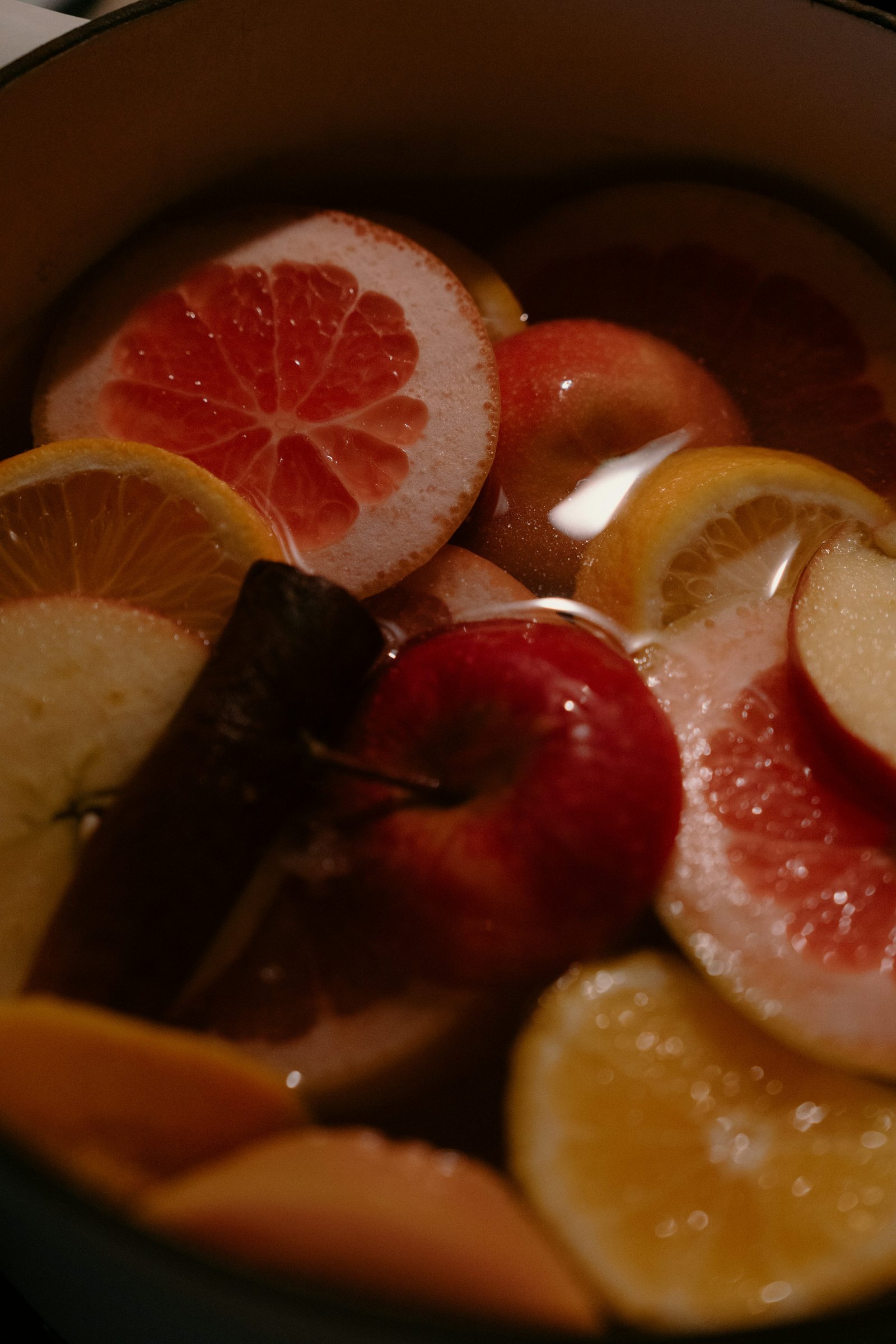
Classic Coal Region boilo recipe
Recipe note: This is an original heritage-inspired home recipe using ingredients found in documented regional versions. It is not claimed to be the one original nineteenth-century recipe.
Prep: 15–20 minutes Simmer: 25–30 minutes Yield: About 9–10 cups, depending on evaporation Serving: Small adult portions
Ingredients
- 2 large oranges and 2 lemons, washed
- 4 cups water
- 2 cups ginger ale
- 1 to 1½ cups honey, according to taste
- 3 cinnamon sticks
- 6 whole cloves
- 6 allspice berries
- ½ teaspoon caraway seeds (optional, but traditional in many families)
- 1 tablespoon sliced fresh ginger
- ¼ cup raisins (optional)
- 1 star anise pod or a tiny pinch of nutmeg (optional)
- 2 cups commercially purchased whiskey, added only after the nonalcoholic base has been removed from heat and cooled
How to make it
- Prepare the citrus. Cut the lemons and oranges into quarters. Squeeze their juice into a large stainless-steel pot, then add some of the peel and fruit. Avoid excessive white pith, which can taste bitter.
- Build the base. Add water, ginger ale, and one cup of honey. Stir gently to combine. You can sweeten it further at the end.
- Add the spices. Stir in the cinnamon, cloves, allspice, caraway, ginger, and any optional raisins or spices.
- Simmer gently. Cook the nonalcoholic mixture at a low simmer for about 25–30 minutes, stirring occasionally. Do not leave the pot unattended.
- Strain and cool. Turn off and leave the cooking surface, then strain out the citrus and whole spices. Let the liquid cool to a comfortably warm temperature.
- Add whiskey safely. Only after the pot is completely away from all heat and ignition sources, stir in the whiskey. Never pour alcohol into a boiling pot or near an active burner or flame.
- Taste and serve. Adjust with a little honey or water if needed. Serve warm, not scalding, in small heat-safe cups. Refrigerate remaining boilo promptly in clean containers; it is not automatically shelf-stable because it contains alcohol.
Safety: Alcoholic boilo is for adults of legal drinking age. Do not drive after drinking. Homemade boilo is not a treatment for illness. For a family-friendly citrus-spice punch, omit the whiskey and substitute more cider, ginger ale, or water; keep the two versions clearly labeled and separate.
Why every family’s batch tastes different
Honey-forward versions preserve the sweetness of the old European liqueur. Citrus-heavy batches emphasize oranges and lemons. Some makers add raisins, a pronounced caraway note, black pepper, or extra cloves. Other families prefer a milder balance of spice, while apple-pie boilo changes the emphasis to apple and cinnamon.
The differences are so well established that the Schuylkill County Fair’s published competition rules include traditional, apple-pie, and other-boilo classes. Boilo competitions have also been held in the middle of summer. By then the drink has become more than a Christmas recipe: it is a point of local pride.
Was homemade moonshine once part of the tradition?
Some accounts describe older families using homemade spirits. That does not mean every early batch contained moonshine, and there is no need to use homemade liquor today. Recipes evolved as products, household tastes, and availability changed. Modern preparations can use legally purchased, food-grade whiskey.
A holiday gift made in the kitchen
Perhaps the most touching part of boilo culture is the way people share it. A jar delivered to a neighbor or relative can carry a story along with it: who first wrote the recipe, which uncle liked more ginger, or which grandmother refused to measure the honey. For some households, swapping jars becomes a friendly competition year after year.
Those exchanges help explain why the tradition endured long after the mines that brought many immigrant families to the region closed or changed. Boilo connects people through a repeatable ritual: buying the fruit, warming the spices, talking over the pot, and remembering someone who used to make it.
If gifting a homemade batch, use clean food-safe containers, refrigerate it, label it clearly as containing alcohol, and share only with adults of legal drinking age.
Preserving your family’s boilo history
There is no single verified “correct” boilo recipe, which makes family records important. The next time a parent, grandparent, or longtime neighbor makes a batch, consider recording the ingredients, quantities, town, and memories attached to it. A handwritten card, photograph, or short video may preserve a piece of Coal Region history for future generations.
For more context about local traditions, explore SkookPA Newz. Readers interested in Schuylkill County communities and homes can visit KennethHoffmaster.com; Pennsylvania notarial and signing information is available at KensNotary.com.
What does your family put in boilo?
Does your recipe come from Shenandoah, Mahanoy City, Pottsville, Frackville, Tamaqua, Girardville, or somewhere else? Do you add raisins, caraway, extra cinnamon, or a secret ingredient? Tell us your family’s boilo story in the comments. The stories behind the recipes are part of the heritage worth saving.
Sources and further reading
- Schuylkill County Ethnic Heritage Study — regional immigration, cultural traditions, and local heritage events.
- WVIA: Boilo Remains a Strong Coal Region Tradition — local celebrations, families, and the connection to krupnikas.
- WVIA: Recipes of the Region — Boilo — a modern family recipe.
- Pennsylvania Capital-Star: Boilo, a Unique Holiday Tradition — recipe variations and family preservation.




0 Comments